
Welcome back.
If you own a small business, Q4 can feel like a sprint that starts before you are ready. The holidays arrive. Customers want answers. Bookings increase. Promotions need to go live. Suddenly, content becomes one more emergency on your list.
I understand that pressure. I plan content across multiple businesses, including Fuel Chef, Modish Visuals, Web Social Pro, ColorFlow Printing, Sweephearts, Rich Knows NJ, and Modish Entertainment.
My solution is not to create more content at the last minute.
It is to create a better system before the rush begins.
As I write this in late October, the easy part of the Q4 planning window has passed, but there is still time to catch up. If you have not started, do not scrap the season. Run a fast version of this playbook now and you can still be scheduled and stocked before Thanksgiving.
Here is the practical playbook I use.
Why September and October Matter
Many business owners wait until November to think about holiday content. That is usually too late.
You need time to:
- Decide which offers make sense.
- Confirm pricing and availability.
- Create photos, videos, graphics, and emails.
- Update landing pages.
- Print physical materials.
- Build awareness before the buying or booking deadline.
- Leave room for revisions.
A holiday campaign often needs several weeks of preparation. The customer may see the final social post in December, but the business should have started planning it in September.
My basic Q4 rhythm looks like this:
- Late September/October: Audit last year and build the plan.
- Early November: Produce, repurpose, and schedule (compress this if you started late).
- Mid-to-late November: Promote, monitor, and adjust.
- December: Capture last-minute demand and prepare for January.
Do not wait for motivation. Put the calendar together now.
Step 1: Audit What Worked Last Q4
Before creating anything new, I review what already performed well.
This is one of the easiest ways to reduce stress. You do not need to invent an entirely new strategy every year. You need to identify what earned attention, clicks, inquiries, bookings, or sales.
Gather last year’s:
- Social posts
- Reels and short videos
- Blog posts
- Email campaigns
- Ads
- Promotions
- Landing pages
- Customer questions
- Sales and booking data
Then sort each item into three categories:
Keep
These pieces performed well and can be reused with updated dates, pricing, visuals, and calls to action.
Improve
These had potential but may have needed a clearer offer, stronger creative, better timing, or a simpler booking process.
Drop
These received little attention or did not support a meaningful business goal.
Look beyond likes. Review:
- Website visits
- Phone calls
- Form submissions
- Email clicks
- Sales
- Bookings
- Direct messages
- Customer feedback
For example, a post with fewer likes may still have generated several catering inquiries. That is more valuable than a post that received a lot of attention but no action.

I also look for patterns:
- Did short videos outperform static graphics?
- Did customers respond to discounts or convenience?
- Did people ask the same question repeatedly?
- Did I promote too late?
- Did the offer have a clear deadline?
- Did the page make it easy to buy or book?
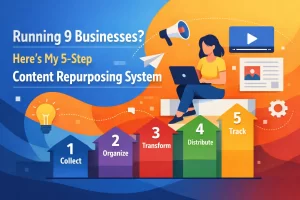
For more background, my five-step content repurposing system explains how I turn one strong idea into multiple pieces of content.
Step 2: Build One Master Calendar
If you manage multiple brands, do not create nine disconnected calendars.
Create one master calendar.
This gives you a complete view of your workload. It also helps you find opportunities to combine production.
Your calendar should include:
| Date | Brand | Topic | Format | Offer or CTA | Status |
|---|---|---|---|---|---|
| Early November | Fuel Chef | Holiday catering preview | Video | Request catering information | Draft |
| Early November | Sweephearts | Pre-party deep clean | Carousel | Book now | Scheduled |
| Mid November | Modish Visuals | Holiday mini-session announcement | Reel | Reserve a session | Production |
| Mid November | ColorFlow Printing | Holiday menus and flyers | Photo post | Request a quote | Draft |
| Late November | Modish Entertainment | Holiday party dates | Video | Check availability | Scheduled |
Keep the system simple. You can use a spreadsheet, project management tool, or calendar application.
The tool matters less than the visibility.
I organize my master calendar by:
- Brand
- Campaign
- Audience
- Content format
- Production deadline
- Publishing date
- Call to action
- Person responsible
- Link destination
The key is to separate content creation dates from publishing dates. If a post goes live December 1, it should not be created on December 1.
Step 3: Repurpose One Idea Across Brands and Channels
Repurposing does not mean copying the same post everywhere.
It means using one central idea in several useful ways.
A simple workflow looks like this:
- Start with a useful blog post or guide.
- Turn the key points into a video.
- Cut the video into short clips.
- Create social captions from the main lessons.
- Turn the tips into an email.
- Create a graphic or carousel.
- Add a printed version when appropriate.

Here is how that can work across my businesses:
- A Web Social Pro article about holiday marketing can become a tutorial video, LinkedIn post, email, and checklist.
- A Fuel Chef catering article can become a behind-the-scenes food video, a holiday menu post, and a gift card promotion.
- A Modish Visuals post about preparing for a photo session can become a holiday mini-session FAQ and a short client-prep video.
- A ColorFlow Printing article can become a printed sample showcase, a carousel, and a post about ordering menus or flyers early.
The content should stay relevant to each audience. The production effort can still be shared.
Create once. Adapt intelligently.
Step 4: Use Holiday Hooks That Fit Local Services
Holiday content does not need to be complicated. It needs to connect your service to a timely customer need.
Here are practical hooks I use or consider:
Fuel Chef
- Holiday catering for office parties and family gatherings
- Gift cards for busy relatives
- “Order ahead before the holiday schedule fills up”
- Meal delivery for customers who are traveling or hosting
Fuel Chef already emphasizes convenience, catering, pickup, and delivery. That makes holiday planning content a natural extension of the brand.
One customer, Lindsey Sullivan, described the service this way:
“Love the convenience of FuelChef… everything is so delicious and makes hitting my macros easy when I’m on the go.”
That is useful holiday messaging. People are busy. Convenience matters.
Sweephearts
- Holiday deep-cleaning
- Party preparation
- Post-party cleaning
- Move-in and move-out service
- “Book before the calendar fills”
Sweephearts offers free quotes and online booking. Those links should appear directly in the content.
Modish Entertainment
- Holiday party DJ and MC services
- Photo booths for corporate events
- Lighting and production add-ons
- “Check your date before another client books it”
Modish Entertainment has a strong urgency angle because event dates are limited. One verified client, Vicente W., wrote:
“He had the crowd dancing for the entire wedding… Professional, entertaining and funny!!!”
That kind of review can support holiday event content without making the post feel like a hard sell.
Modish Visuals
- Holiday mini-sessions
- Family portraits
- Corporate event coverage
- Gift certificates
- Batch-shooting behind-the-scenes content
ColorFlow Printing
- Holiday menus
- Promotional postcards
- Event flyers
- Gift certificates
- Table cards and signage
- New Year’s marketing materials
Print needs a longer lead time than many owners expect. Order before the rush.
Rich Knows NJ
- Year-end real estate market recaps
- Local holiday guides
- Predictions for the new year
- Home-selling preparation tips
- Neighborhood business spotlights
A useful market recap can attract attention even when people are not ready to buy or sell immediately.
Step 5: Batch-Record and Batch-Shoot
One of my biggest Q4 priorities is batching production.
Do not wait until you need a video to record it. Schedule one production block and create several assets at once.
A productive batch session might include:
- Three educational videos
- Two customer FAQ videos
- One holiday offer video
- Behind-the-scenes footage
- Product or service photos
- Team photos
- Short clips for Stories and Reels
- Testimonial graphics
- Seasonal B-roll

For Modish Visuals, that could mean scheduling several shoots in one day and capturing both client work and promotional content.
For Fuel Chef, it could mean filming catering trays, meal preparation, packaging, and delivery moments during one production session.
For Sweephearts, it could mean recording before-and-after footage, deep-cleaning tips, and party-preparation content during scheduled service visits, with the customer’s permission.
Batching saves setup time. It also makes your brand look more consistent.
My Simple Q4 Action Checklist
Use this checklist from the comfort of your home or office:
This week
- Pull last year’s Q4 posts, emails, blogs, and promotions.
- Review clicks, inquiries, sales, bookings, and questions.
- Label content Keep, Improve, or Drop.
- Choose one to three major Q4 campaigns.
- Confirm holiday pricing, availability, and deadlines.
Next week
- Build one master content calendar.
- Add every brand and campaign.
- Choose the main call to action for each offer.
- Identify content that can be repurposed.
- Schedule one batch production day.
During October
- Write captions and emails.
- Record videos.
- Photograph products, services, and people.
- Update website pages.
- Order printed materials.
- Schedule content ahead of time.
- Test every booking, quote, and checkout link.
During November and December
- Monitor what is generating inquiries.
- Repeat the strongest messages.
- Add urgency as deadlines approach.
- Share customer reviews.
- Promote gift cards, open dates, and last-minute availability.
- Track what to improve next year.
Start Before You Feel Ready
You do not need a perfect Q4 strategy.
You need a clear one.
Audit what worked. Build one calendar. Repurpose your strongest ideas. Batch your production. Give every promotion a simple next step.
The goal is not to be everywhere all the time. The goal is to show up consistently with useful content when your customers are ready to act.
Start today. Choose one brand. Review last year’s Q4 content. Then build from there.
Subscribe, follow along, and stay connected for more practical lessons on marketing, content creation, business development, and managing multiple ventures.
Learn one new system today. Then put it to work.