
In 2026, polished content is easy to produce. AI tools can help create a clean graphic, a smooth video, or a well-written caption in minutes. The challenge is that every feed is filling up with content that looks and sounds alike.
That creates an opportunity for business owners: show people the real person behind the business.
I own and operate 10 businesses, including Web Social Pro, Modish Visuals, and Rich Knows NJ. I work across digital marketing, media, real estate, and other industries. I’ve seen how valuable it is to explain what I’m doing, what I’m learning, and why I make the decisions I make.
Founder-led content isn’t about making every post a sales pitch. It’s about making your perspective visible, and giving people a real reason to listen.
You don’t need a studio. You need something useful to say, a phone, and a plan to keep showing up.

Why the founder’s voice matters more in an AI-heavy feed
AI can help you create content faster. But a polished post alone doesn’t tell people whether you have first-hand experience, how you think, or what you stand for.
A founder can bring those things into the open:
- First-hand knowledge: What have you seen or learned by doing the work?
- Judgment: How do you decide what to do when the answer isn’t obvious?
- Accountability: Who is behind the advice, product, or service?
- Personality: What does working with you actually feel like?
The evidence around AI and trust is worth paying attention to. In a Meltwater and YouGov report, 86% of respondents said AI-generated content should be disclosed, and 32% said it would make them trust a brand less. Those findings don’t mean people reject every use of AI. They do suggest that transparency and human judgment matter.
Founder-led content isn’t automatically trustworthy just because the founder is on camera. It works when you share something real, make your perspective clear, and avoid pretending that generic or automated material is personal expertise.
Unpolished doesn’t mean careless
Let’s be clear: a shaky video with muffled audio isn’t automatically more authentic than a well-produced one. Unpolished should mean natural, not hard to watch.
You can make content feel human and still care about quality. Find a quiet spot. Face a window or use a simple light. Keep the camera steady. Say one clear thing. You do not need a full production crew to make a useful post.
I work in photography and video through Modish Visuals, so I appreciate good production. But production quality and credibility are not the same thing. A beautiful video can be forgettable. A clear, direct explanation from a founder can make someone stop and think.

What should you film?
Don’t wait for a big announcement. Your everyday work is full of useful material. Capture the moments when you make a decision, solve a problem, or notice a change that could help someone else.
Try these prompts:
- A decision I made this week, and why. Explain the trade-offs in plain language.
- A question I hear often. Answer it as if you’re talking to one customer.
- A lesson from the work. Share what surprised you or what you’d do differently next time.
- A process people don’t usually see. Show a quick, appropriate behind-the-scenes moment.
- A myth or misunderstanding in my industry. Explain what people often miss.
- A point of view I’ve changed. Tell people what you used to think and what changed your mind.
For example, as someone who works in digital marketing, I could explain how I think about a website’s role in a customer’s decision. In real estate, I could talk about a local detail buyers should look into. In media production, I could share what helps a business prepare for a shoot.
The key is to speak from your experience. Don’t make claims you can’t support. Don’t share private customer details. And don’t turn every useful thought into a pitch.
Start with your phone
A phone is enough to begin. Keep the setup simple:
- Use the camera you already have. Start with the rear camera if you’re comfortable framing yourself, or use the front camera for an easier check.
- Choose clear audio. Record somewhere quiet. If your space is noisy, a basic external microphone can help.
- Find soft light. Face a window or place a light in front of you, not directly behind you.
- Frame the shot. Keep your face clearly visible and leave a little space around your head.
- Talk to one person. Imagine answering a real question from a customer, not addressing a stadium.
- Keep the point focused. One video, one idea. You can explain more in another post.
You can film a useful clip from your office, your workspace, or the comfort of your home. You don’t need to wait until every detail is perfect.
Film one take. Watch it once. Fix what genuinely distracts. Then post it.
Consistency beats polish when polish becomes the delay
A common trap is spending so much time refining one post that you never publish the next one. A repeatable habit is more useful than a perfect video that stays in your drafts.
That does not mean publishing every thought. It means giving yourself a manageable rhythm. Choose a cadence you can sustain alongside running your business. Your goal is to build familiarity over time, not to win every feed with every post.
Think about your audience’s questions. Think about the work you are already doing. Then make a habit of capturing one useful thought when it’s fresh.
This fits naturally into your Q4 content calendar. Set aside a few minutes during the week to note the questions, decisions, and observations you might share. Use your planned batch-shooting time to record a small group of focused clips. Leave room for timely updates, too. Your calendar should help you show up, not make your voice sound scripted.
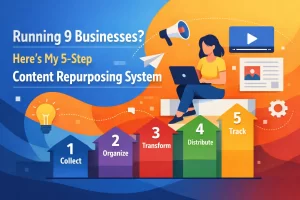
If you’ve read my post on running multiple businesses and creating a content repurposing system, this is a different starting point: begin with the founder’s real insight. Then fit that insight into the content workflow you already use.

Use AI as a helper, not a substitute for your perspective
AI can help you organize rough notes, draft interview questions, or tighten a caption. It can save time on routine tasks. But it can’t replace your responsibility for what you publish.
Before a post goes live, check:
- Is this based on what I actually know or have experienced?
- Are the details and claims accurate?
- Does it sound like something I would say?
- Have I disclosed AI use where it matters?
- Am I protecting customer, employee, and business information?
Treat AI-generated material as a draft that needs your review. Your point of view is the value. Don’t remove it in the editing process.
Make it part of how you market
Founder-led content is not a magic fix, and it doesn’t guarantee immediate sales. It is a practical way to help people understand the person and thinking behind a business. Over time, clear explanations can support trust, help prospects make informed decisions, and give your brand a more recognizable voice.
Start small this week:
- Write down three questions you hear from customers or colleagues.
- Choose one you can answer from experience.
- Record a short video on your phone.
- Share it with a direct, useful caption.
- Note what people ask next, and keep learning from the conversation.
I’m building my own content by sharing what I learn across 10 businesses and different industries. You can do the same in your own field. You don’t need to imitate another founder or wait until you feel like an expert on camera. Be specific. Be honest. Be useful.
Pick one idea. Press record. Learn as you go.